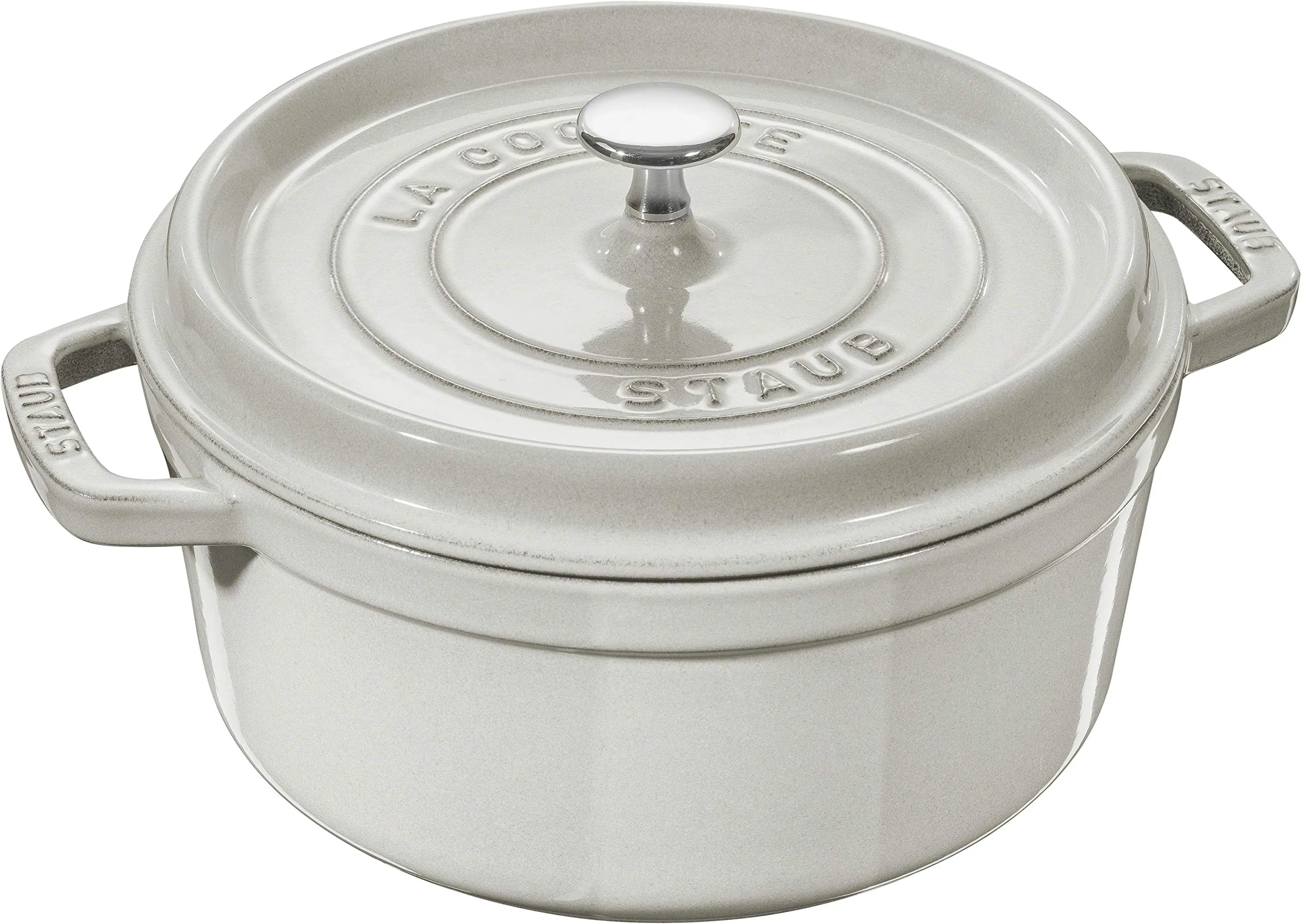
The Staub Story: French Cast-Iron Cookware Since 1974
How a cocotte cast in a former Alsace artillery factory became the cast-iron benchmark cooks reach for — who makes Staub, where it is made, and what sets it apart.
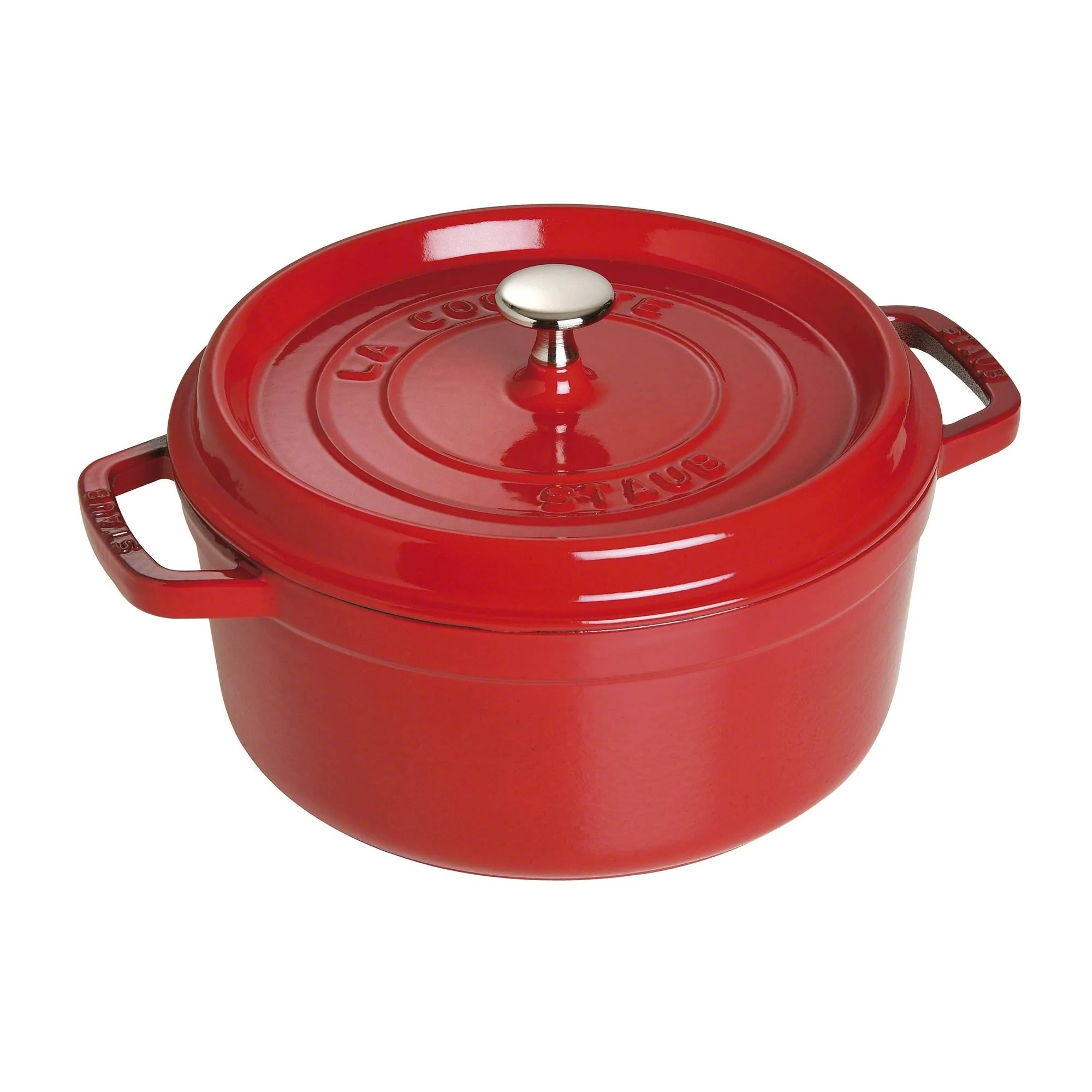
Where Staub began: Alsace, 1974
Staub began in 1974, when Francis Staub designed his first enameled cast-iron cocotte in a dormant artillery factory in Turckheim, in the Alsace region of north-eastern France. The grandson of a cookware merchant, he set out to perfect the one-pot — pairing the heat retention of cast iron with a hard-wearing enamel that needs no seasoning. He refined the shape with hand-carved wood models until the pot moved cleanly from stovetop to oven to table. That first round cocotte became the template for everything the brand makes today.
Alsace runs through the design. The region is known for hearty, slow-cooked food and meticulous craft, and the Alsatian stork — a local emblem — still sits in the Staub logo as a mark of that heritage.
What makes a Staub a Staub
Sand-cast in France
Each pot is cast in a single-use sand mould, then finished with a double-glazed enamel, so no two pieces are exactly alike.
Black matte interior
The interior enamel is textured with traces of quartz, which builds deeper browning and a natural patina — without the seasoning bare cast iron needs.
Self-basting lid
The heavy, flat lid carries spikes on its underside that condense steam and rain it back over the food, keeping braises and roasts moist.
Works on every stovetop
The smooth enamel base sits flush on gas, electric, ceramic and induction, then goes from oven to table. The cast iron is oven-safe to 500°F with the lid.
Colour, by design
Staub moved beyond black in the 1980s, drawing its palette — cherry, grenadine, basil, graphite — from the Alsatian landscape.
Built to last decades
Enameled cast iron resists rust, chipping and cracking, which is why owners routinely hand a Staub down rather than replace it.
Who owns Staub now — and is it still made in France?
In June 2008, Staub joined the Zwilling J.A. Henckels group, the German cutlery and cookware company. Staub kept its own identity and continues to operate as an independent brand. Its enameled cast iron — the cocottes, French ovens and braisers this site covers — is still made in France. Some ceramics and accessories are produced elsewhere, so the made-in-France mark applies specifically to the cast-iron range.
That blend of traditional sand-casting and modern enamel is why a single Staub cocotte can replace several pans and outlast them, and why it stays a reference brand for chefs — Paul Bocuse among them.
Explore the range by shape and size
Frequently asked questions
Who founded Staub, and when?
Francis Staub founded Staub in 1974 in Alsace, north-eastern France. The grandson of a cookware merchant, he designed the first enameled cast-iron cocotte in a former artillery factory in Turckheim.
Where is Staub made?
Staub’s enameled cast-iron cookware is made in France. Some ceramics and accessories are produced elsewhere, but the cast-iron cocottes, French ovens and braisers are French-made.
Who owns Staub today?
Staub has been part of the Zwilling J.A. Henckels group since June 2008. It still operates as an independent brand, with its cast iron produced in France.
Why is the interior black instead of cream?
Staub uses a black matte enamel textured with traces of quartz. It hides stains, develops a natural patina, and builds a deeper sear than the smooth cream interiors used by some competitors.
What are the spikes on the lid for?
They are self-basting spikes. The flat, heavy lid condenses steam and drips it back over the food, keeping meat and vegetables moist through long braises — no manual basting needed.
Is Staub worth the price?
It is a premium, made-in-France product built to last decades. For regular braising, baking and roasting, a single cocotte can replace several pans and outlast them, which is why many owners treat it as a buy-once, hand-it-down piece.